



Table of contents
The safest shower curtain materials are hemp and organic cotton. They contain no toxic chemicals, release no VOCs, and carry GOTS or OEKO-TEX certifications.
Hemp is the strongest choice for humid bathrooms because it resists mold without any chemical treatment. Organic cotton is soft, breathable, and gentle for families.
PVC shower curtains are the least safe option. A 2008 study found they can release up to 108 volatile organic compounds into bathroom air.
What Is Off-Gassing and Why Does It Happen in Your Bathroom?

Off-gassing is the release of chemicals into the surrounding air as gas. You have probably noticed it. That sharp smell when you unpack a new vinyl shower curtain is a perfect example.
Bathrooms make this problem worse. Hot water from your shower heats the curtain surface. A small enclosed space traps the vapors. Low ventilation lets them concentrate. All three factors work against you at the same time.
Symptoms of VOC Exposure
- Headaches and lightheadedness after showers
- Eye, nose, and throat irritation
- Nausea in enclosed or poorly ventilated bathrooms
- Worsened asthma or allergy symptoms over time
Who Is Most Vulnerable
- Infants and young children whose lungs are still developing
- Pregnant women, where fetal exposure is a concern
- People with asthma, chemical sensitivities, or respiratory conditions
- Anyone in a bathroom with no window or exhaust fan
A 2008 study by the Center for Health, Environment and Justice (CHEJ) tested new PVC shower curtains and detected up to 108 volatile organic compounds. The off-gassing from a single curtain was measurable in a room for up to 28 days after opening.
|
Related Guide Read: What Chemicals Does a PVC Shower Curtain Release Into Your Bathroom? |
The Main Shower Curtain Materials and What They Mean for Your Health

PVC (Vinyl)
PVC stands for polyvinyl chloride. It is the standard material for most cheap shower curtains. To make rigid PVC flexible enough to hang, manufacturers add plasticizers called phthalates. Those phthalates are what off-gas into your bathroom air.
- Releases VOCs including dioxins, organotin compounds, and phthalates
- Phthalates are classified as endocrine disruptors by the EPA
- Off-gassing can persist for up to 28 days in an enclosed bathroom
- Cannot be recycled in most US curbside programs
PEVA (Polyethylene Vinyl Acetate)
PEVA is often marketed as the safer plastic alternative to PVC. It does not contain chlorine, and its VOC output is lower. But it is still a plastic material with no biodegradable end-of-life. Third-party health certifications for PEVA products are rare.
- No chlorine, so no dioxin risk
- Lower VOC output than PVC, but not zero
- Not biodegradable
- A reasonable short-term compromise if budget is tight
Hemp
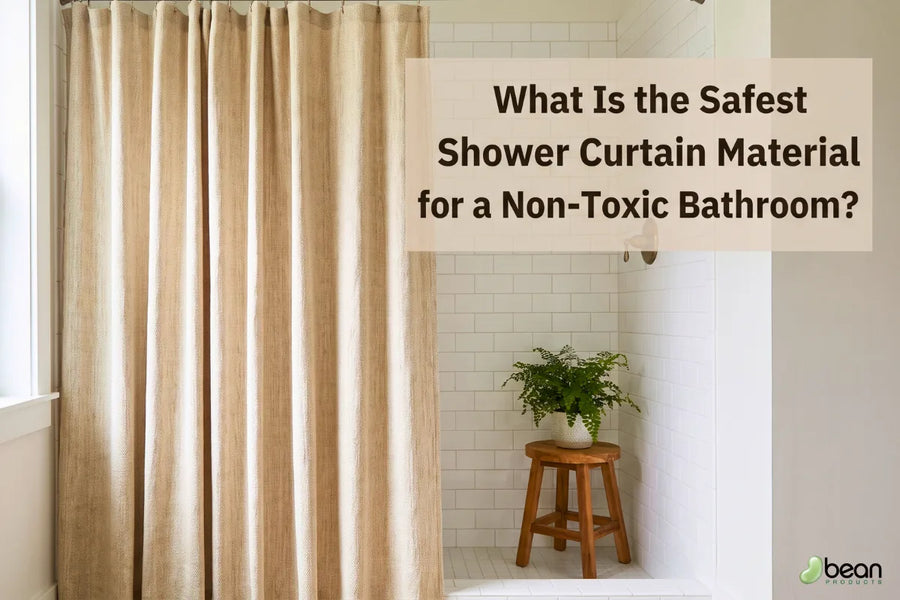
Hemp canvas is the standout option for bathrooms. A heavy-weight hemp curtain blocks water well, resists mold without any chemical finish, and releases nothing into your bathroom air. It gets softer with every wash and can last a decade with basic care.
- 100% natural fiber with no synthetic chemicals
- Naturally antimicrobial, mold and mildew resistant
- No liner needed with canvas weight fabric
- GOTS certified options available
- Fully biodegradable at end of life
Organic Cotton
GOTS certified organic cotton is grown without pesticides and processed without toxic dyes or chemical finishes. It is soft, breathable, and a strong choice for families with sensitive skin. It benefits from a fabric liner in heavy-splash bathrooms.
- Certified free from harmful residues under GOTS
- Breathable and gentle on skin
- Machine washable and long-lasting
- Pairs well with a thin fabric liner for high-splash showers
Linen
Linen is made from flax fibers. It is lightweight, breathable, and dries quickly. It works best in bathrooms with moderate water splash. It is less thick than hemp but adds a clean, minimal look that suits modern bathrooms.
- Fast-drying natural fiber
- No synthetic chemicals in natural undyed versions
- Works well with a liner in wet showers
|
Related Guide Read: PVC vs. PEVA vs. Hemp Shower Curtains: Which One Should You Choose? |
Quick Comparison: All Main Materials Side by Side
|
Feature |
PVC |
PEVA |
Hemp |
Organic Cotton |
|
Toxic chemicals |
Yes (108+ VOCs) |
Minimal |
None |
None |
|
Off-gassing |
Strong, up to 28 days |
Low |
None |
None |
|
Mold resistance |
Poor |
Moderate |
Excellent |
Good with airflow |
|
Biodegradable |
No |
No |
Yes |
Yes |
|
Certifications |
None standard |
None standard |
GOTS, OEKO-TEX |
GOTS, OEKO-TEX |
|
Liner required |
Yes |
Yes |
No |
Optional |
|
Safe for pregnancy |
No |
Possibly |
Yes |
Yes |
How to Read Shower Curtain Certifications (And Which Ones Actually Matter)
Words like "natural," "eco-friendly," and "chemical-free" have no legal meaning on product labels. Anyone can print them. Certifications are different. They require third-party testing and carry real requirements. Here are the three worth knowing.
GOTS: Global Organic Textile Standard
GOTS is the most respected organic textile certification in the world. It covers the full supply chain from raw fiber through to the finished product. A GOTS label means the fiber was grown organically, the processing banned toxic chemicals, and the labor conditions met social standards.
- Prohibits harmful dyes, heavy metals, and finishing agents
- Covers both the fabric and the manufacturing process
- Annual audits required to maintain certification
OEKO-TEX Standard 100
OEKO-TEX Standard 100 tests the finished textile for over 100 harmful substances. It covers pesticide residues, dyes, heavy metals, and formaldehyde. This certification applies to both conventional and organic textiles, so it is useful even when GOTS is not available.
- Tests the final product, not just the raw fiber
- Covers 100+ regulated substances
- Widely recognized and independently verified
MADE SAFE
MADE SAFE screens every ingredient in a product against a database of known harmful chemicals. It specifically targets endocrine disruptors, neurotoxins, and carcinogens. It is the most thorough certification for health-conscious buyers.
- Ingredient-by-ingredient safety screening
- Specifically checks for hormone-disrupting compounds
- Strong signal for pregnancy-safe and baby-safe products
|
Related Guide Read: What Should You Look for When Buying a Non-Toxic Organic Shower Curtain? |
Why Hemp Performs Best in Bathroom Conditions

Hemp is not just safe. It is also the most practical natural material for a shower environment. Here is why it consistently outperforms other options in actual bathroom use.
It Resists Mold Without Chemical Treatment
Hemp fibers have a naturally tight weave structure that limits how much moisture they hold. The plant also contains compounds with natural antimicrobial properties. Together, these qualities make mold and mildew much harder to establish on hemp fabric compared to cotton or synthetics.
- Faster drying time than cotton reduces mold risk
- No chemical mold-resistant finish needed
- Stays cleaner between washes in humid bathrooms
Heavy Canvas Weight Blocks Water Without a Liner
Most fabric shower curtains need a plastic liner inside them to block water. With a proper weight hemp canvas, the weave is tight enough to block splashing on its own. This matters because it eliminates one more plastic item from your bathroom.
- 15 to 18 oz hemp canvas blocks water effectively
- No plastic liner means less waste and less maintenance
- Simplifies the whole shower setup
It Gets Better With Age
Hemp fabric softens with every wash cycle. Unlike synthetic materials that degrade and become brittle, hemp gets more comfortable over time while keeping its structural strength. A good hemp curtain can last five to ten years with monthly washing.
|
Related Guide Read: Why Is Hemp the Best Natural Material for a Mold-Resistant Shower Curtain? |
Safest Shower Curtain for Pregnancy and Sensitive Skin
Pregnancy underscores the importance of indoor air quality in ways that daily life does not always make obvious. Small spaces like bathrooms, used multiple times daily, become significant exposure points during a pregnancy. The same applies to newborns and infants in the home.
What to Avoid During Pregnancy
- PVC curtains: phthalates are linked to developmental concerns in prenatal research
- Any curtain with a strong chemical smell when new
- Products without third-party certification, as label claims are unverified
- Curtains with waterproof coatings that use PFAS or formaldehyde-based finishes
What Works for Sensitive Skin
Chemical sensitivities and skin conditions like eczema can be aggravated by synthetic materials and the residues they leave behind. Natural fiber curtains that are certified under GOTS or OEKO-TEX do not carry these residues. If GOTS certification is not a requirement for you, a non-toxic cotton shower curtain in duck canvas gets you the same PVC-free, phthalate-free bathroom at a lower price.
- Hemp: naturally hypoallergenic, no synthetic finish
- GOTS organic cotton: certified free of toxic dyes and chemical treatments
Both materials are breathable and do not trap humidity against the skin
How to Pick the Right Non-Toxic Shower Curtain for Your Bathroom

The right material depends on your bathroom type, household situation, and how much maintenance you want to deal with. Here is a simple framework to help you decide.
High-Humidity or Splash-Heavy Bathrooms
- Hemp canvas is the best pick for resistance to mold and water
- Go for 15 to 18 oz weight for best water blocking performance
- Spread the curtain fully open after every shower to aid drying
Families With Young Children or Pregnant Members
- GOTS organic cotton is the softest and gentlest on skin
- Add a thin fabric liner if your shower splashes heavily
- Wash every two to three weeks to keep fibers fresh
Eco-Conscious Buyers Thinking Long-Term
- Natural curtains cost more upfront but last years longer than PVC
- No replacements needed for one to two years like with cheap vinyl
- Both hemp and organic cotton are biodegradable at end of life
Minimalist or Spa-Style Bathrooms
- Natural undyed hemp has a warm earthy canvas tone
- Organic cotton comes in natural, white, and grey options
- Linen adds a light, airy look with a fast-drying quality
How to Care for a Natural Fabric Shower Curtain

Natural shower curtains are not fragile. They just need consistent, simple care to stay clean and mold-free. The most important habit is also the easiest: leave the curtain fully open after every shower so it can air-dry.
Hemp Curtain Care
- Machine wash cold on a gentle cycle with mild detergent
- Hang to line dry or tumble dry on low heat only
- Wash every two to four weeks depending on bathroom humidity
- For mildew spots, soak in white vinegar diluted with water before washing
Organic Cotton Curtain Care
- Cold water only to prevent fiber shrinkage
- Gentle cycle with fragrance-free detergent
- Line dry when possible for maximum longevity
- Wash every two to three weeks, or more often in humid bathrooms
General Tips for All Natural Curtains
- Never use bleach. It breaks down natural fibers over time
- Avoid fabric softener. It reduces the fabric's breathability
- Inspect grommets occasionally for rust. Choose rust-proof metal grommets
|
Related Guide Read: How Do You Wash a Hemp or Organic Cotton Shower Curtain Without Ruining It? |
Make Your Bathroom Safer Starting With One Simple Swap
If you are ready to switch to a natural option, Bean Products has made hemp and organic cotton shower curtains in Chicago since 1987. Every curtain is made in the USA using certified natural materials, with no toxic finishes or chemical coatings.
Available in bath, tub, and stall sizes. Rust-proof grommets. No plastic liner needed for hemp styles.
Browse our collection of organic cotton shower curtains to find the right size and material for your bathroom.
Buy Organic Cotton Shower Curtain Now!

References
1. U.S. Environmental Protection Agency — Volatile Organic Compounds and Indoor Air Quality
https://www.epa.gov/indoor-air-quality-iaq/volatile-organic-compounds-impact-indoor-air-quality
2. Global Organic Textile Standard (GOTS) — Version 7.0
https://global-standard.org/the-standard/version-7
3. OEKO-TEX Standard 100 — What Is Tested
https://www.oeko-tex.com/en/our-standards/oeko-tex-standard-100
4. National Institutes of Health / PubMed — Phthalate Exposure and Human Health
https://pubmed.ncbi.nlm.nih.gov/18684747/
5. MADE SAFE — Certification Criteria
https://www.madesafe.org/science/criteria/
Related Reads
Written by the Bean Products Editorial Team | Bean Products, Chicago, IL | Eco-friendly home goods made in the USA since 1987.


