



Table of contents
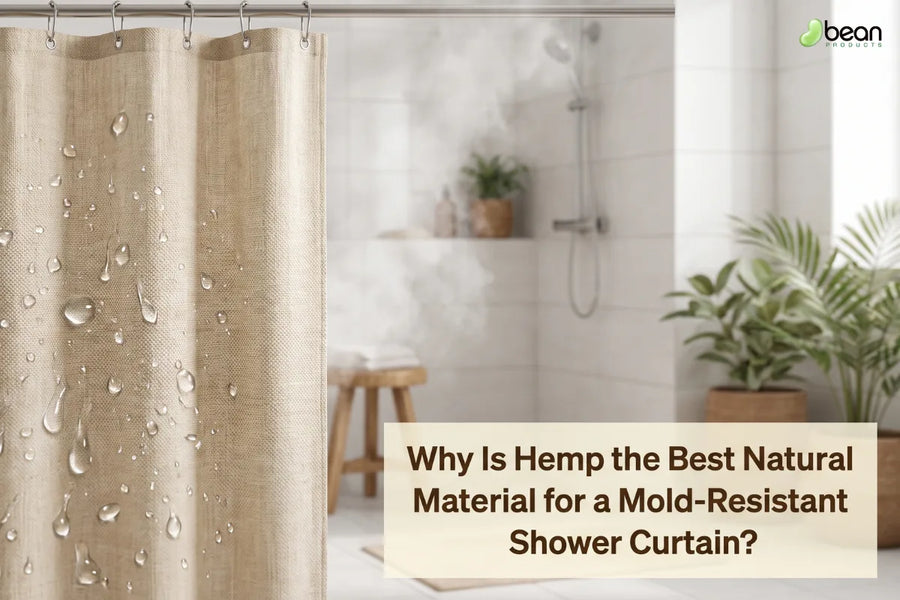
Hemp resists mold better than any other natural shower curtain material because of two combined advantages: it contains natural antimicrobial compounds including cannabinoids, terpenes, and lignin, and it dries faster than cotton or linen after each shower.
It does not eliminate all mold risk under any conditions, but it significantly slows mold development compared to other fabrics. No natural fiber is immune to mold if kept permanently damp. Hemp simply gives mold far less opportunity to establish than its alternatives.
Why Shower Curtains Are Such a Common Place for Mold to Grow

Mold needs three things to grow: moisture, a surface to attach to, and warmth. A bathroom provides all three every day. The shower curtain is often the most vulnerable surface because it gets wet repeatedly, takes time to dry, and hangs in a space with limited airflow.
The material the curtain is made from determines how much opportunity mold gets after each shower. Some materials hold moisture for hours. Others dry in minutes. Some actively slow mold growth through their own chemistry. Others provide a smooth, inert surface that mold colonizes easily.
Why PVC and Plastic Curtains Are Especially Prone to Mold
- Plastic is non-porous, so water sits on the surface rather than evaporating through the fabric
- It has no antimicrobial properties of any kind
- The smooth surface makes it easy for mold spores to attach and spread
- The folds and creases at the bottom hem trap standing water for hours
- Mold on PVC also means you are exposing yourself to mold spores on top of chemical off-gassing
Why Cotton Struggles in Humid Bathrooms
- Cotton absorbs water readily and holds it for a long time
- A wet cotton curtain in a poorly ventilated bathroom can stay damp for hours
- Cotton has no natural antimicrobial compounds
- Without a liner, water soaks all the way through the fabric
- Even organic cotton needs very good ventilation or a liner to stay mold-free
|
Related Guide Read: What Is the Safest Shower Curtain Material for a Non-Toxic Bathroom? |
The Science Behind Hemp's Natural Antimicrobial Properties
Hemp's mold resistance is not a marketing invention. It has a documented basis in the fiber's chemical composition. Several classes of naturally occurring compounds in Cannabis sativa have been studied for their antimicrobial and antifungal activity.
Cannabinoids
Hemp contains over 100 different cannabinoid compounds. Research published in the Journal of Natural Products found that five major cannabinoids, including CBD, CBC, and CBG, showed potent antimicrobial activity against a range of bacteria. A separate study published in Biomolecules and Therapeutics identified cannabinoids as a class of antibacterial agents active against methicillin-resistant Staphylococcus aureus (MRSA) strains. These compounds remain in the fiber even after it is processed into fabric.
Terpenes
Terpenes are aromatic compounds found throughout the hemp plant. Research published in MDPI Molecules analyzed 17 varieties of fiber-type hemp essential oil and identified 71 compounds. The dominant terpenes included alpha-pinene, beta-pinene, beta-myrcene, and beta-caryophyllene. All of these have documented antimicrobial properties. A 2021 study found that terpenes in hemp essential oil exhibited antibacterial activity against Streptococcus agalactiae and MRSA strains.
Lignin
Lignin is a structural compound found in the cell walls of hemp fibers. It gives hemp its characteristic stiffness and strength. Research has shown that lignin naturally inhibits bacterial and fungal growth. It is one of the reasons hemp fabric stays resistant to mold even after repeated washing, unlike chemical antimicrobial treatments that wash out over time.
Flavonoids
Hemp also contains flavonoids, a class of plant compounds with antioxidant and antimicrobial properties. Research on plant fibers published in Molecules in 2022 identified flavonoids as one of the key contributors to the antibacterial activity of natural plant fibers, including hemp. Together with cannabinoids, terpenes, and lignin, they form a multi-compound defense system that no synthetic material replicates.
The key point: These compounds are present in the fiber itself. They are not added in processing. They do not wash out after a few laundry cycles. They are a built-in property of the hemp plant.
|
Related Guide Read: What Chemicals Does a PVC Shower Curtain Release Into Your Bathroom? |
Mold Resistant vs. Mold Proof: An Important Distinction
Almost every hemp shower curtain brand claims to be mold-resistant. Very few make the important distinction between resistance and immunity. Understanding this difference helps you use your curtain correctly and set realistic expectations.
What Mold Resistant Actually Means
- Hemp actively slows the development of mold and mildew compared to other fabrics
- The antimicrobial compounds in the fiber make it harder for mold spores to colonize the surface
- Hemp dries faster than cotton, which reduces the window of opportunity for mold growth after every shower
- Under the same bathroom conditions, a hemp curtain will stay mold-free significantly longer than cotton or PVC
What It Does Not Mean
- Hemp is not completely immune to mold under all conditions
- A hemp curtain left bunched against a wet wall in an unventilated bathroom will eventually develop mildew
- The antimicrobial properties slow mold growth; they do not prevent it permanently in adverse conditions
- No natural fiber is mold-proof if kept perpetually damp
The Conditions That Determine Real-World Performance
- Ventilation is the most important variable: an exhaust fan or open window dramatically reduces mold risk
- Spreading the curtain fully open after every shower allows it to dry within minutes
- Monthly washing removes any spores that have begun to establish before they can spread
- A bathroom with no ventilation and a bunched curtain will challenge even hemp
The honest summary: hemp gives mold far less opportunity than any other curtain material. But it works best when paired with basic good habits. The curtain does most of the work. You do a little of it too.
Why Hemp Dries Faster Than Cotton or Linen and Why That Matters

Drying speed is the second major reason hemp outperforms other natural materials in a bathroom. The faster a curtain dries after a shower, the shorter the window in which mold can establish. This is a physical property of the fiber, not a chemical one.
How Hemp Handles Moisture Differently
- Hemp fibers have a hollow core structure that allows moisture to move through the fabric rather than being trapped within it
- The tight canvas weave allows water droplets to run off the surface rather than soaking in
- Hemp fabric moisture content decreases quickly once the source of water is removed
- Independent reviews have noted that hemp dries faster than any other natural fiber shower curtain, including linen
How Cotton Compares
- Cotton fibers are highly absorbent and hold moisture for extended periods
- A soaked cotton curtain can stay wet for several hours in a typical bathroom
- This extended wet period is precisely when mold spores have the best chance to root
- This is why organic cotton curtains almost always benefit from a liner and require excellent ventilation
What This Means in Practice
Spreading a hemp curtain open across the full rod after your shower lets it dry quickly. In a bathroom with even basic ventilation, a hemp canvas curtain is typically dry within 30 to 60 minutes. A cotton curtain in the same conditions may still feel damp two to three hours later. That time difference is when mold either starts or does not.
|
Related Guide Read: PVC vs. PEVA vs. Hemp Shower Curtains: Which One Should You Choose? |
How the Physical Weave Structure of Hemp Canvas Adds Another Layer of Protection
Beyond the chemistry and the drying speed, hemp's weave structure provides a third layer of mold resistance. A quality hemp canvas shower curtain is woven at 15-18 oz. This is a heavy, tight weave that behaves very differently from lighter fabric alternatives.
What a Tight Weave Does
- Water beads and runs off the surface rather than being absorbed into the fibers
- Less moisture absorption means less time spent wet after each shower
- Mold spores find it harder to penetrate deeply into a tightly woven surface
- The canvas weight also means no plastic liner is needed, removing an additional source of mold risk
How It Compares to Lighter Fabrics
- Lightweight cotton or linen shower curtains absorb water more readily due to their looser weave
- Sheers and lightweight decorative curtains are especially vulnerable to mold in humid bathrooms
- A heavier canvas weight is not just about durability: it directly affects how much moisture the fabric holds
The No-Liner Advantage
Most fabric shower curtains require a plastic liner inside to block water. That liner itself becomes a major surface for mold growth. It is usually the liner, not the decorative curtain, where the pink and black mold you see in bathrooms first appears. A heavy hemp canvas curtain eliminates the need for that liner entirely, removing one of the most common mold surfaces from your bathroom.
Hemp vs. Organic Cotton vs. Linen: A Honest Comparison
All three are safe, natural alternatives to PVC. But they perform differently in a bathroom environment. Here is a direct comparison across the factors that matter most for mold resistance.
|
Factor |
Hemp |
Organic Cotton |
Linen |
|
Antimicrobial compounds |
Yes, natural cannabinoids, terpenes, lignin |
No |
Minimal |
|
Drying speed |
Fastest of all natural fibers |
Slowest |
Fast |
|
Mold resistance |
Excellent |
Poor without liner |
Good |
|
Needs a liner |
No |
Usually yes |
Sometimes |
|
Gets stronger when wet |
Yes |
No |
Yes |
|
Softens over time |
Yes, after a few washes |
Stays the same |
Yes from first use |
|
Lifespan |
5 to 10 years |
3 to 5 years |
3 to 6 years |
Linen is a strong second choice because of its fast drying time. It lacks hemp's antimicrobial compounds but performs significantly better than cotton. Organic cotton is the softest option and ideal for well-ventilated bathrooms or households that use a fabric liner. Bean Products' white cotton shower curtains are a popular choice for these lower-humidity setups. Hemp is the top choice for any bathroom where humidity is a real concern.
The One Thing Most Hemp Curtain Brands Do Not Tell You
Hemp canvas has a short break-in period. When your curtain arrives, it will feel stiff and rough. Some buyers are surprised by this, especially if they are used to soft fabric curtains. This is normal and expected with any natural canvas material.
What Happens Over the First Few Washes
- The canvas fibers relax and soften significantly with each wash cycle
- By the third or fourth wash, the texture changes noticeably
- After several months of regular use and washing, hemp canvas becomes genuinely soft
- This is the opposite of synthetic materials, which start soft and degrade over time
Why the Stiffness Is Actually a Good Sign
- The initial stiffness comes from the same tight weave density that makes hemp water-resistant
- A softer, lighter hemp product would not perform as well in a humid bathroom
- The canvas weight is what makes a liner unnecessary and mold development slow
Think of it like a good pair of canvas work boots or a quality denim jacket. The break-in period is short, and what you are left with is a product that improves with age rather than one that degrades.
|
Related Guide Read: How Do You Wash a Hemp or Organic Cotton Shower Curtain Without Ruining It? |
What to Look for in a Hemp Shower Curtain That Actually Delivers on Mold Resistance

Not all hemp curtains perform equally. The mold resistance described in this article stems from the fiber's natural properties, combined with a proper canvas weight and weave. Thin or blended hemp products may not deliver the same results. Here is what to look for when choosing.
Material and Weight
- Look for 100% hemp canvas with a stated weight of 15 oz or higher
- Avoid vague descriptions like "hemp blend" without specified percentages
- Canvas and tightly woven are the terms that signal proper weight and density
Certifications That Verify What the Label Claims
- GOTS certification confirms the fiber is genuinely organic and processed without toxic chemicals
- OEKO-TEX Standard 100 verifies the finished curtain against 100+ harmful substances
- Without certification, non-toxic and organic claims on labels are unverified marketing
How Bean Products Hemp Curtains Are Made
Bean Products hemp shower curtains are made from 100% natural hemp canvas, handcrafted in Chicago since 1987. Every curtain is made from certified natural materials with no synthetic dyes, chemical finishes, or coatings. The canvas weight is sufficient to block water without a liner. Rust-proof grommets are available in bath, tub, and stall sizes.
The result is a curtain that delivers on the mold resistance hemp is known for: through its natural fiber chemistry, its tight-weave structure, and how quickly it dries after every shower.
|
Related Guide Read: What Should You Look for When Buying a Non-Toxic Organic Shower Curtain? |
Make Your Bathroom Safer Starting With One Simple Swap
Bean Products has made hemp shower curtains in Chicago since 1987. Every curtain is made in the USA from certified natural hemp canvas with no toxic finishes or off-gassing. Available in bath, tub, and stall sizes. No plastic liner needed.
Browse our hemp shower curtain collection to find the right size for your bathroom.

People Also Ask (FAQs)
Does hemp actually prevent mold or just resist it?
Hemp resists mold but doesn't prevent it completely. It dries quickly and naturally slows mold growth, but it should still be opened after each shower and washed regularly.
Why does hemp resist mold without any chemical treatment?
Hemp naturally contains antimicrobial and antifungal compounds in its fibers, so no chemical treatments are needed.
How long does a Bean Products hemp shower curtain stay mold-free?
With regular care, it can stay mold-free for years. Open it after each shower and wash it every 2–4 weeks.
Is hemp better than linen for mold resistance in a shower?
Yes. Both dry quickly, but hemp also has natural antimicrobial properties that help resist mold better than linen.
Do I need a liner with a hemp shower curtain?
No. A heavyweight hemp canvas curtain repels water well on its own, so a liner isn't necessary.
Can I put a Bean Products hemp curtain in the washing machine?
Yes. Machine wash on a cold, gentle cycle with mild detergent, then line-dry or tumble-dry on low. Avoid bleach.
Related Reads
References
1. BioResources - Antibacterial Properties of Hemp and Other Natural Fibre Plants: A Review
2. MDPI Molecules - Chemical Characterization and Antibacterial Activity of Essential Oils from Fibre-Type Cannabis sativa L. (2019)
https://www.mdpi.com/1420-3049/24/12/2302
3. Journal of Natural Products - Antibacterial Cannabinoids from Cannabis sativa: A Structure-Activity Study (Appendino et al., 2008)
https://pubmed.ncbi.nlm.nih.gov/18681481/
4. Molecules - Antimicrobial Properties of Plant Fibers (Zamora-Mendoza et al., 2022)
https://www.mdpi.com/1420-3049/27/22/7999
5. NIH PMC - Spent Material Extractives from Hemp as a Source of Antimicrobial Cannabinoids
https://www.ncbi.nlm.nih.gov/pmc/articles/PMC11201062/
6. ScienceDirect - Cannabidiol and Terpenes from Hemp: Ingredients for Future Foods and Processing Technologies (2022)
https://www.sciencedirect.com/science/article/pii/S2772566922000015
Written by the Bean Products Editorial Team | Bean Products, Chicago, IL | Natural home goods made in the USA since 1987.


